Skip to content

AP Spanish · National Spanish Exam

They hear
the English.

tu español suena bien

A correct sentence can still land with an English mouth. Allow the microphone, say a phrase you already know, and a teacher names what slipped: the puff on hola, the American r in pero, the extra beat in niño. Latin American Spanish. No account required.

Say a phrase

We discard the recording

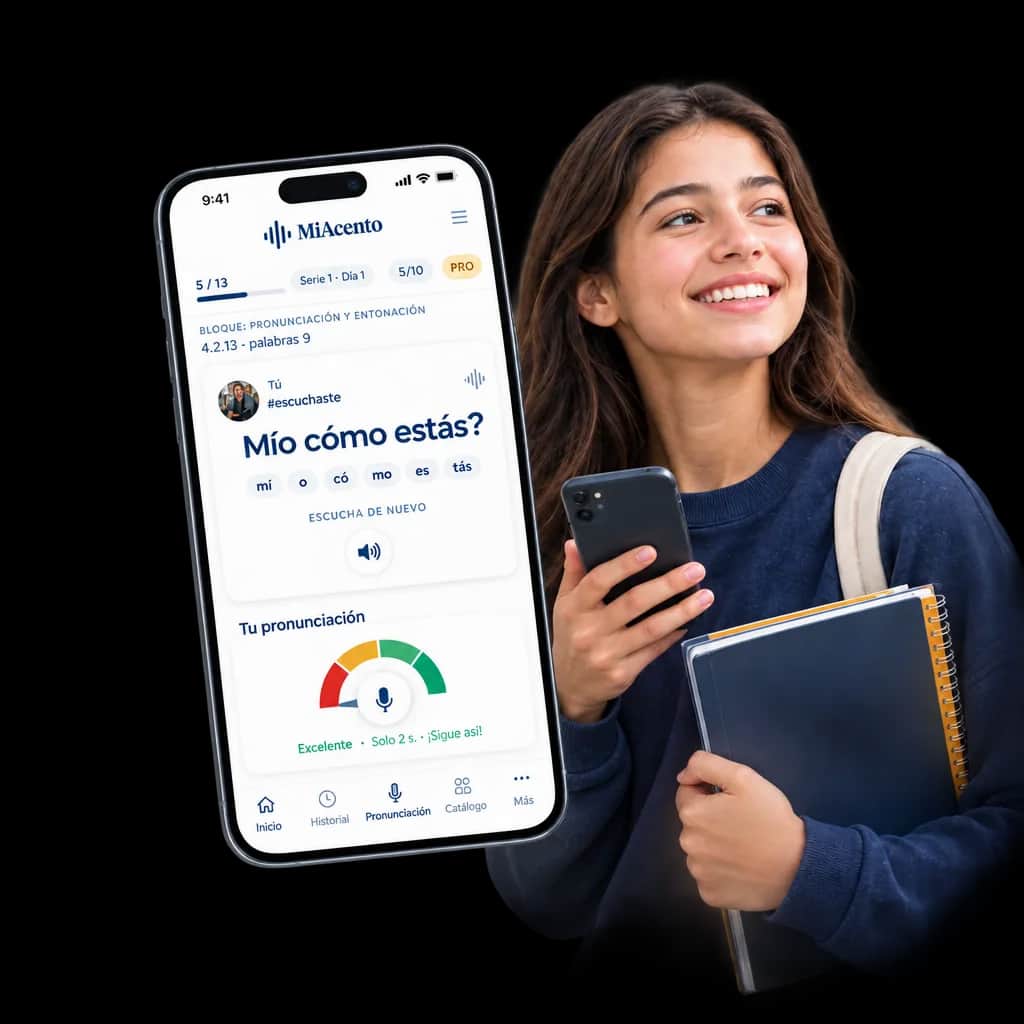
Student with MiAcento on a phone showing Hola, ¿cómo estás?

Why the sound matters

Speaking scores weigh more than the grammar sheet.

You can know the subjunctive and still lose points when the listener has to work. On the exam and in ordinary talk, the same English mouth habits get in the way.

On speaking day they hear the clip

AP interpersonal and presentational speaking reward answers that are easy to follow. An English r, a sliding vowel in no, or a missing ñ leave the grammar intact and still make a correct sentence harder to catch. That is often where the score moves.

If you cannot hear it, you will say it English

The National Spanish Exam leans hard on listening. pero and perro, cana and caña: when those pairs collapse in your ear, they collapse in your mouth. The contrast you miss as a listener is the one that still sounds English when you speak.

Stress can change the verb

hablo and habló are different words. English speakers often flatten the accent or put it on the wrong syllable. An examiner hears another form of the verb.

English habits that linger in Spanish

A few sounds cause most of the trouble.

  • Tap vs trill·pero / perro
  • ñ, one beat·niño, año
  • Steady vowels·no, cómo (no glide)
  • Silent h·hola starts like ola
  • b and v·vino ≈ bino
  • Stress·hablo / habló

How it works

Say the phrase. Hear what slipped.

Nothing to install. The browser asks for the microphone. You talk. One of four teachers (Javier, Diego, Lucía, Carmen) names the sound that still sounds English.
  1. 1

    Say a phrase you already know

    Start with something ordinary: hola, gracias, perro. Speak at a normal pace. The page is scoring the sounds, not a performance.

  2. 2

    A teacher answers in their voice

    You get a mark for each sound. Then you hear the same phrase from the teacher you chose, and your recording right after.

  3. 3

    The weak sound comes back

    Miss the tap in pero? Later phrases keep bringing that r until it stops landing like English “pair-oh.”

A scale students already recognize

Gold
Silver
Bronze

Gold, silver, and bronze echo the NSE medal labels as a visual cue. They are not an official ranking, and we do not assign them.

The exams students actually sit

AP Spanish. National Spanish Exam.

AP Spanish Language and Culture

Interpersonal and presentational speaking are on the exam. Use the site to practice the mouth habits that keep those answers clear: the sounds that make a good answer hard to follow when they go wrong.

National Spanish Exam

Listening all year, then speaking in class. The same contrasts (r and rr, ñ, stress) show up before medal week and before AP. The medals on this page are a visual nod only.

MiAcento is an independent practice tool. It is not affiliated with the College Board, AATSP, or the National Spanish Exam.

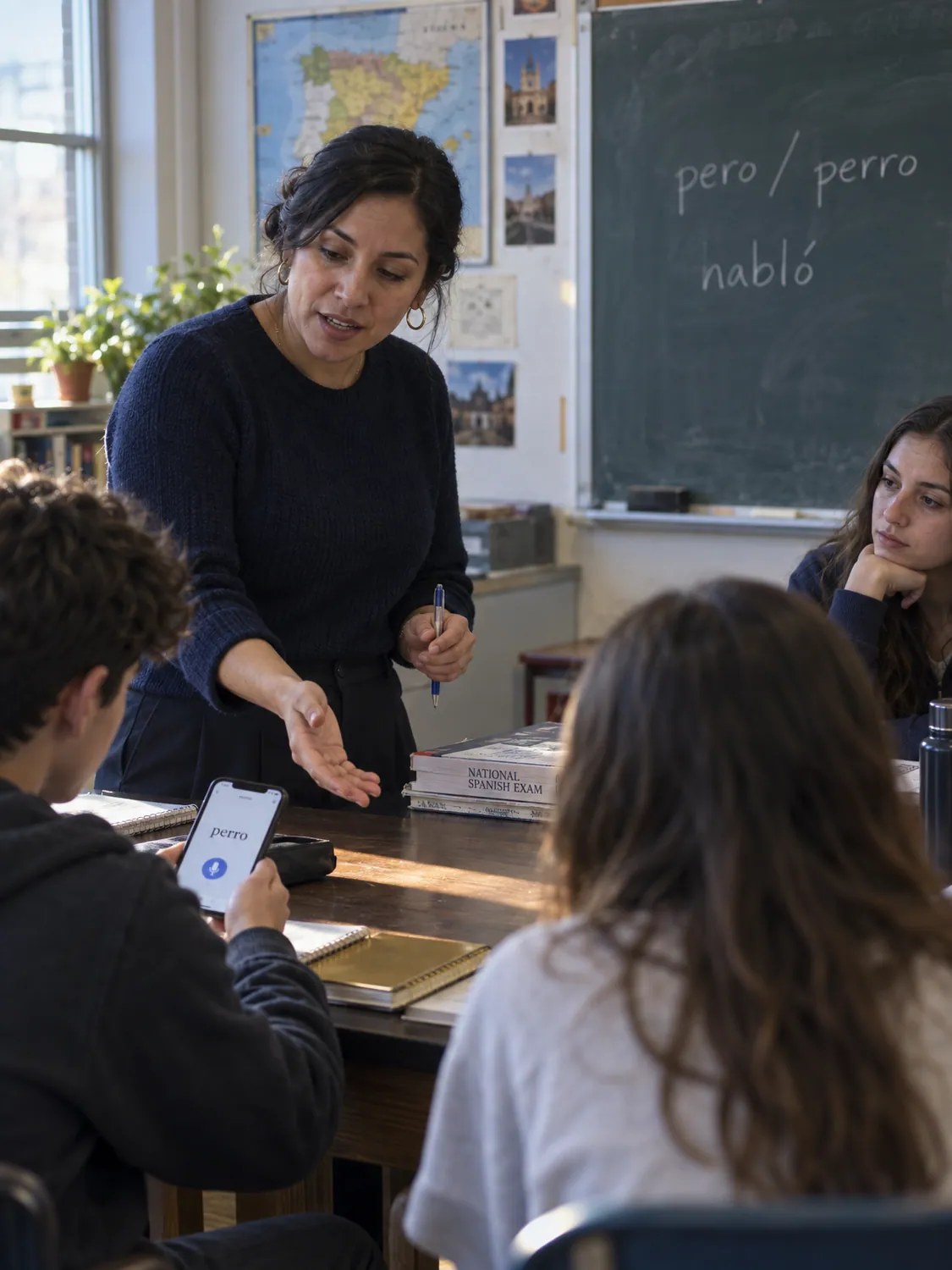
Spanish teacher at the board writing perro, student practicing on a phone

For teachers

Something you can put in front of a class.

Students use what a teacher actually assigns. Feedback names the sound. The page stays quiet. The recording is discarded after scoring, which is usually the first question in an email from home.

  • Send a browser link. They can try a phrase before anyone creates an account.
  • Homework notes can stay specific: “the tap in pero,” instead of “work on your accent.”
  • We discard the recording after scoring.

Pricing

Start with one phrase. Add a class later.

In the browser

Free

No account. Allow the microphone, say a Spanish phrase, hear which sounds landed. Enough to decide whether this is worth mentioning to a class.

For a class

Write us

If a whole section should use the same practice, tell us the school and roughly how many students. We reply with what we can actually offer.

Questions

What people ask before they turn on the mic.

Is MiAcento affiliated with AP or the National Spanish Exam?
No. We build practice for students who sit those exams. We are not affiliated with the College Board, AATSP, or the National Spanish Exam, and we do not issue official scores or medals.
Do you store my recordings?
No. After you allow it, the clip goes to Microsoft Azure Speech for a score and is then discarded. We do not keep the file. The privacy policy names every recipient.
Who is this for?
English speakers working on Latin American Spanish, including AP Spanish and National Spanish Exam students, and the teachers who choose what they practice with. You must be 13 or older.
What kind of Spanish do you train?
Latin American Spanish (Mexico locale). Everyday words: hola, perro, gracias, hablo. We do not teach the Castilian th. hola starts like ola; the r in pero is one tap, like the tt in American “better”; ñ is one sound.
Do I need an account?
Not on the site. Open Practice, allow the microphone, say the phrase. An account is only useful when progress should stick across days; that lives in the app when it ships.
Can a whole class use it?
Yes. Share the browser link. Students can try a phrase without creating accounts first. Teachers who want classroom access should write us.
Is this a grade or an official score?
No. Feedback is practice. It is not an AP score, an NSE result, or a medal. The teachers name which sound slipped. They do not put a number on a transcript.
How is this different from Duolingo and other apps?
Those apps teach words and grammar, then treat pronunciation as recognized or not. Here there is no vocabulary lesson. The page breaks the phrase into sounds and flags what still sounds English: the puff on hola, a missing trill in perro, an extra beat in niño.
We discard the recording

We discard the recording.

The clip is scored, then discarded. What remains is a structured result (which sounds were weak), not your voice file.

Privacy policy
MiAcento — tu español suena bien